COLLECTED LIGHT · ORIGINAL STORY
The Night Seoul Once Lost
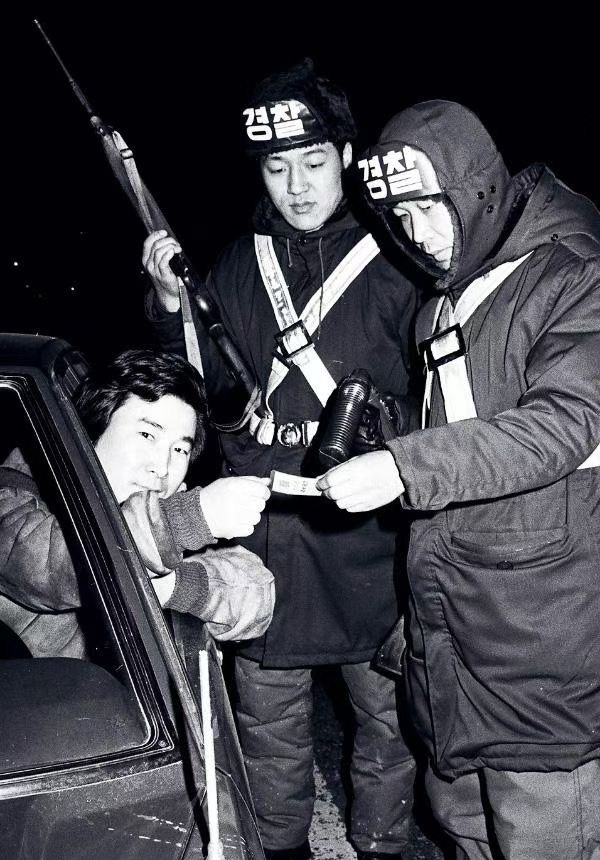
It was supposed to be an ordinary afternoon.
I wandered into a small museum tucked beside the U.S. Embassy in Seoul, expecting nothing in particular.
Instead, I stumbled upon the history of the night.
Today, Seoul after dark feels free, vibrant—almost addictive.
What few people realize is that this city once lived under a nightly curfew for 36 years (1945–1982).
The night was once taken away.
Maybe that's why it feels so alive today.
Inside the museum, the lights were deliberately dim.
As if to remind visitors that this was the story of a night that had been confiscated.
The exhibition began in 1901, when Seoul lit electric streetlights for the very first time.
That first light wasn't merely illumination.
It marked the beginning of a new era.
But light didn't necessarily bring freedom.
Soon, history entered another chapter:
Curfew.
Orders lined the walls.
No one on the streets after a certain hour.
Movement prohibited at night.
The official reasons were always the same:
Safety. Order. Stability.
Yet standing there, another thought quietly emerged.
This wasn't only about controlling a city.
It was about controlling people.
Because night is where people become... unpredictable.
Day belongs to rules.
Night belongs to people.
And human nature has never been very good at staying locked away.
Before midnight, every evening became a race home.
People rushed for the last bus.
The streets filled with anxious crowds.
Then, after midnight,
another city quietly came alive.
Go-Go clubs would pull down their metal shutters...
and keep dancing behind closed doors.
The music stayed inside.
The rules stayed outside.
At four in the morning, when the curfew was lifted, people would step back onto the streets and gather for bowls of hangover soup,
as if completing a secret ritual of freedom.
You can control time,
but never desire.
Further inside, the exhibition suddenly softened.
One entire wall was dedicated to the emotions of the night.
Day belongs to the world.
Night belongs to yourself.
And at night,
everything we hide during the day... comes back quietly.
Then I noticed two old love letters.
Yellowed paper.
Simple handwriting.
Nothing extravagant.
Yet somehow deeply moving.
With Google Translate in hand, I read them line by line.
Letter One — Dear My Beautiful Lily
"Dear my beautiful Lily..."
"Tonight the training camp is lit only by the stars.
As always, I searched for the moon. Tonight it hangs in the sky like a small fingernail.
I looked at it for a long time before returning to my dormitory with a quiet sigh.
Sometimes distant artillery and nighttime drills make the night feel endless.
But when everything grows silent, and only the stars remain, it becomes the kind of quiet that lets you hear your own heart.
Even if only in my dreams, I want to see you.
I'm writing this letter, hoping I'll fall asleep before the ink dries.
Let's meet in our dreams.
Good night."
"Let me meet you, even if only in a dream."
Letter Two — A Night in March
"A quiet night.
A deep March night.
How have you been?
I miss you.
I sit through these long hours, listening to the lullaby inside my own heart while slowly revisiting our memories.
Lying quietly in the darkness, my eyes drift in and out of focus.
All I can see is you.
Not hearing from you leaves me worried.
I've been trying to live well.
To eat properly.
To become a better version of myself.
So that the next time we meet...
you'll be happy to see me again."
"I'm trying to become someone you'd be happy to see again."
When I finished reading, the museum suddenly became very quiet.
Neither letter ever said,
"I love you."
Yet every line leaned gently toward the other person.
Back then, nights were longer.
Slower.
So longing stretched longer too.
Maybe love felt deeper back then—
not because people loved more,
but because they had to wait longer.
When I stepped outside, Seoul's nightlife had already begun.
The streets were bright.
The restaurants were full.
Everything looked perfectly normal.
Then it struck me.
None of this was inevitable.
This freedom had once been restricted.
Endured.
Longed for.
Only after all of that did it become what it is today.
If day is about order,
night is about truth.
The world becomes orderly during the day.
People become whole at night.
Night
Lights can brighten.
Roads can widen.
But the words we truly want to say...
usually arrive only after dark.
And some feelings...
only exist after dark.
Seoul's nights are lively.
But perhaps what makes them truly beautiful
is remembering that they were once
so incredibly quiet.
#Seoul #HistoryOfTheNight #SeoulAfterDark #HumanNature