COLLECTED LIGHT · ORIGINAL STORY
The Moon is still the same Moon
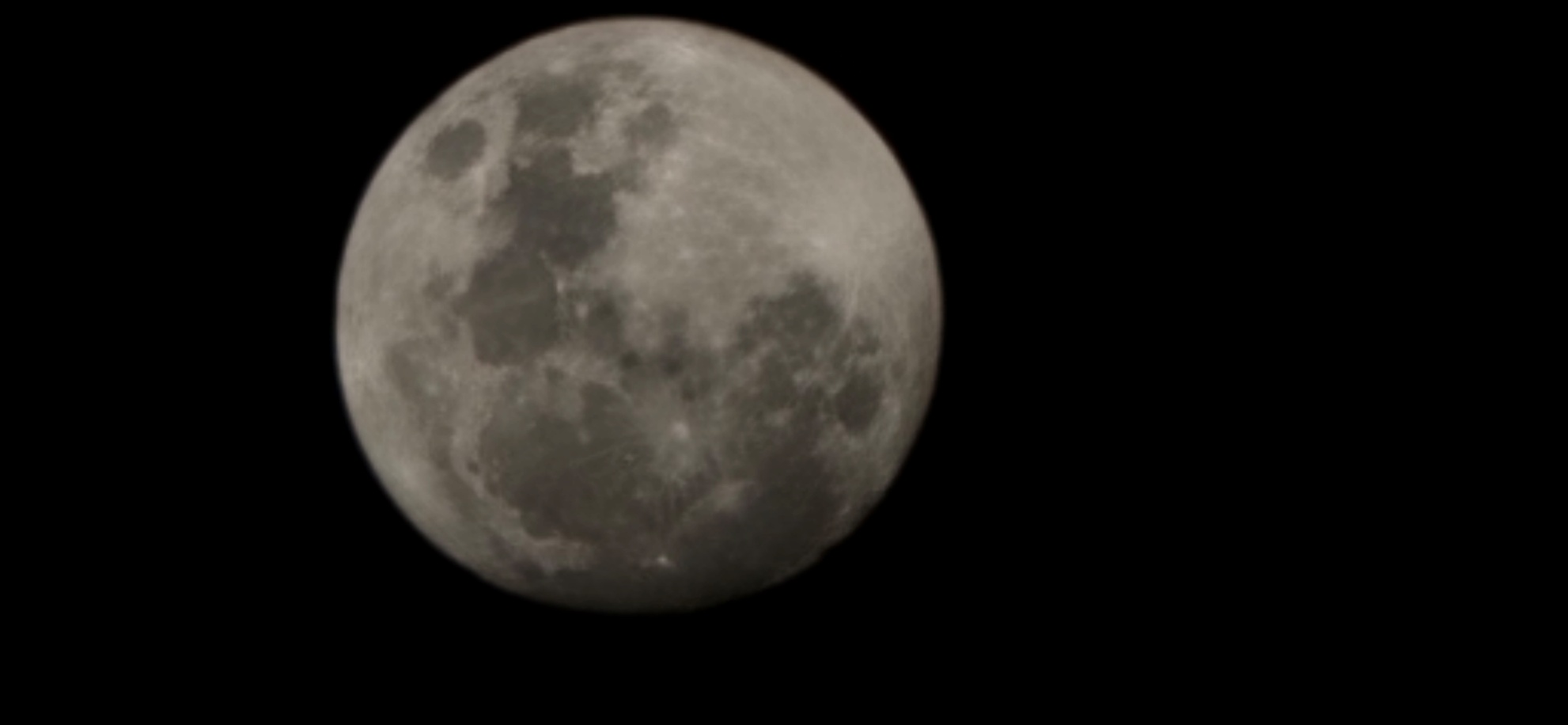
This Mid-Autumn Festival, something occurred to me.
The same day can mean completely different things to different people.
For much of the world, today is simply another Friday. In Korea, it is Chuseok—a time to go home, honor one’s ancestors, and eat songpyeon; many people there may not even know what a mooncake is. In China, it is Mid-Autumn Festival: family, reunion, and mooncakes.
The day is still the same day. The moon is still the same moon.
What changes is the person looking at it.
Over the years, I’ve lived in different countries and cities and done very different kinds of work—from hospitals and laboratories to sales, product, and business leadership; from research and real estate to restaurants and e-commerce. The farther I’ve traveled, the less certain I’ve become that anything is simply “the way it is.”
The smell of coffee on Yonge Street in Toronto on a quiet morning and the scent of pine around Mount Rainier are both wonderful, but they belong to entirely different worlds.
In Barcelona, ten in the morning can feel like the day is only beginning, and dinner at eight or nine is perfectly normal. After years in North America and Asia, even the clock seems to run differently there.
In Sydney, an ordinary bird on the street might be a brightly colored parrot. In Seattle, it’s more likely to be a crow. Live in Korea long enough, and you get used to magpies outside your window.
None of this feels remarkable to the people who live there. To them, that is simply what life looks like.
And that is precisely the point: we have a tendency to mistake the world we see every day for the way the world actually is.
Stay in one place long enough, and it becomes easy to mistake local consensus for universal truth. What counts as success? How much money is enough? What should you have accomplished by a certain age? What is worth holding on to, and what should you let go?
Hear the same answers often enough, and you begin to think that this is simply how life is supposed to be.
I’ve come to believe that our surroundings shape us far more deeply than we realize. They don’t just determine whom we meet or what opportunities come our way. Quietly, they also shape what we are capable of imagining.
Sometimes the real boundary in a person’s life isn’t “I can’t do that.”
It’s never having imagined: Wait—life can be like that?
Change your surroundings, and many things you once took for granted become questions again. Something everyone cares about in one place may mean almost nothing somewhere else. A life considered unconventional in one culture may be perfectly ordinary in another.
I notice this at work, too.
A room full of people can spend hours arguing over A versus B. These days, I’m more inclined to ask: Why does it have to be A or B?
Eventually, I started questioning the question itself.
Who decided this was the problem? Why are we trying to solve it? What if we’re answering the wrong question altogether?
Maybe that’s also why I enjoy arguing less than I used to.
When I was younger, I thought that if you explained something clearly enough, people would understand.
I don’t believe that anymore.
We never communicate through words alone. Behind every sentence stands the life of the person saying it.
Where you grew up. How your parents loved you. What you read. What work you did. Where you traveled. Whom you met. What you gained. What you lost.
All of it becomes part of how you understand even a single sentence.
So two people can speak the same language and use the same words, yet not really be talking about the same thing at all.
Once I understood that, a lot of arguments stopped feeling worth having.
Not because I think I’m right.
Quite the opposite. I’m increasingly aware that what I see is only one angle.
So much of life is perception.
And perhaps that is why I’ve come to value something much rarer.
Every now and then, you meet someone who knows where you’re going before you finish the sentence.
Not because they agree with you.
But because, for a moment, you realize:
Oh. You’ve been here too.
That, to me, is what being “on the same wavelength” really means. It doesn’t mean two people are alike in every way, and it certainly doesn’t require some grand idea of soulmates. It simply means that two people have traveled very different roads and somehow arrived at a few of the same places—places where explanation is no longer necessary.
That kind of understanding is rare.
Familiarity, on the other hand, has its own inertia.
People who have known you for years naturally understand the person you are today through the person you used to be. They may not be wrong. But stay too long inside familiar expectations, and sometimes, without realizing it, you begin living along the lines of your own past.
That is why leaving familiar places once in a while can be a good thing.
Not because you are running away.
But because somewhere new, no one knows who you used to be. No one has already decided who you are supposed to become. Things you stopped questioning long ago suddenly become questions again:
Why does it have to be this way?
Maybe that is also why, as I get older, there are a few things I find increasingly difficult to compromise on: beauty, depth of thought, and love.
They may seem unrelated, but perhaps they share something.
Once you have truly seen certain things, it becomes difficult to pretend you haven’t.
Once you have seen something genuinely beautiful, the ordinary is still ordinary, but you can no longer confuse the two. Once you have thought deeply about a question, a shallow answer rarely satisfies you again.
Perhaps much of life works this way.
The world you have seen eventually becomes part of who you are.
So I’ve also become more comfortable with the fact that some people will never fully understand me, and I will never fully understand them.
That’s all right.
No two people have walked exactly the same road. Why should we expect them to see everything the same way?
Stay curious. Don’t be too quick to dismiss something simply because you haven’t encountered it before. And just because you have traveled a few more roads, don’t assume you are standing any higher than anyone else.
The world is enormous. Each of us sees only a small piece of it.
As for understanding, perhaps it was never something that could be explained into existence.
And somehow, that brings me back to the moon.
Some people are celebrating Chuseok. Some are celebrating Mid-Autumn Festival. Some have no idea that today is anything special at all.
Some are gathered with family. Some are on the road. Some are thinking of home. And some are thinking of someone they haven’t seen in a very long time.
We meet many people over the course of a life. Some stay with us for years; others walk beside us only for a while. Where they eventually go, how their lives turn out—we may never know. The world is wide, and some people, once our paths part, we may truly never see again.
I used to think that seeing someone meant crossing the distance between you and standing face to face.
Now I’m not so sure.
As long as we are still somewhere in this world, we are living through the same stretch of time. We may look up at the same moon, feel the wind of the same season, and quietly go on living our separate lives without knowing anything about each other.
Perhaps remembering someone once in a while is its own kind of meeting.
And if you let the thought travel a little farther, it becomes even more remarkable.
Hundreds of years ago, thousands of years ago, people looked up at this same moon.
They spoke languages different from ours and lived lives we can barely imagine. They are long gone now, but longing itself does not seem to have changed very much.
Generation after generation has entrusted the same moon with thoughts of reunion, home, separation, and the people they missed. Thousands of years of human joy and sorrow, all looking in the same direction.
Seen that way, perhaps it is a good thing that the universe is so vast.
There are so many words left unsaid, so many people we never saw again, so much longing carried across oceans, mountains, and years.
All of it needs somewhere large enough to exist.
The moon, of course, knows none of this.
It knows nothing of Mid-Autumn Festival or Chuseok. It doesn’t know who is together tonight and who is missing someone.
Joy and sorrow, home and separation—those belong to us.
For thousands of years, the moon has simply risen as it always has, shining on the roads that brought us here and on the people who eventually went their separate ways.
And each of us looks up at it carrying an entire lifetime of our own.
The moon is still the same moon.