COLLECTED LIGHT · ORIGINAL STORY
The Way Life Should Be
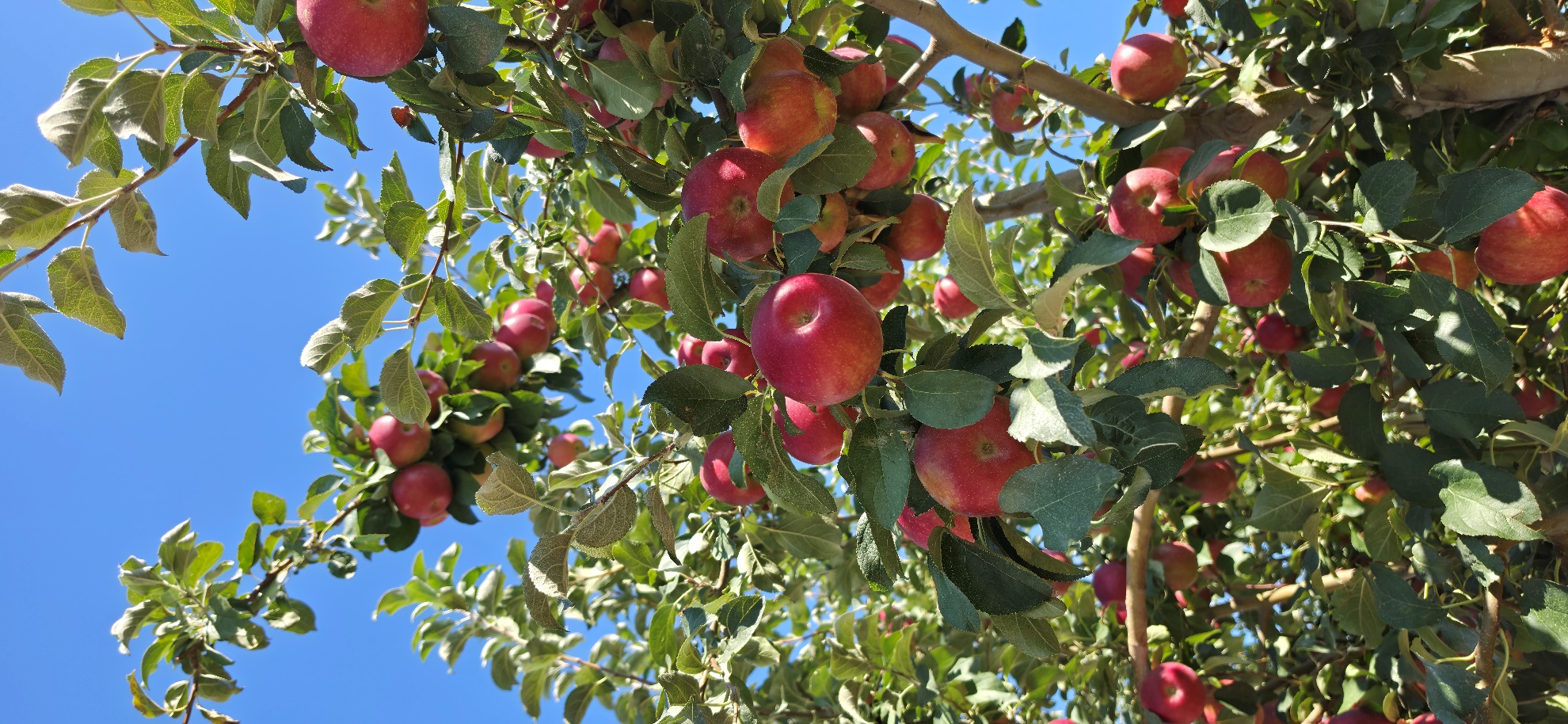
After returning from Seoul, I took a road trip through Osoyoos and Penticton.
Most of my memories of British Columbia are of the coast around Vancouver—the ocean, the forests, and that deep green that seems to stay wet year-round. But heading east this time, I discovered an entirely different landscape.
The mountains grew drier and more rugged, with sparse vegetation and sharply defined ridgelines. Through the valleys and along the highways stretched endless apple orchards, vineyards, and wineries, with one lake appearing after another.
It reminded me a lot of Lake Chelan and Wenatchee in Washington—the same valleys, the same orchards, the same little towns that seem to have grown up around the water.
Only there were far fewer people.
Sometimes I could drive along a lake for an hour and barely see another person. That sense of emptiness reminded me of northern Ontario.
Coming back from Gangnam in Seoul made the contrast even more striking.
Just days earlier, I had been surrounded by packed subway cars, work, meetings, numbers, messages—everything pushing you to move faster. Then suddenly I was here, as if someone had pressed the slow-motion button on life.
Cars moved slowly. People walked slowly. Boats drifted slowly. Wine was sipped slowly.
At first, it almost felt strange.
Before I moved to Asia, I used to vacation at Lake Chelan every year. On the way there, I would always pass a little farm by the highway.
The farmer would put freshly picked yellow apricots into boxes and leave them on a table by the road. A small sign said: $5 a box.
No cashier. No cameras. No one watching.
Just a little jar for the money.
You took what you wanted and left the cash yourself.
Every time I stopped, there was already plenty of money in the jar.
Once, curiosity got the better of me. Where was the farmer?
I wandered around the side of the property and eventually spotted the family behind the house, floating on the Columbia River.
They were sitting in inner tubes, drinking, laughing, enjoying the afternoon.
Meanwhile, cars kept pulling over by the highway. Strangers picked up fruit, left their money, and drove away.
The family hardly seemed to care.
It was as though the possibility that someone might take the fruit without paying had never even crossed their minds.
This time, in Penticton, after riding an old steam train preserved from the last century, I passed another roadside fruit farm on my way back to our place by the lake.
Again, nobody was there.
The farm was full of apples, grapes, vegetables, and other produce. On a table sat a scale and a price list.
The instructions were obvious:
Pick what you want. Weigh it yourself. Work out the price. Leave the money.
Unfortunately, all I had were a few U.S. dollars and credit cards—no Canadian cash. I stood there looking at the fruit for a while before reluctantly leaving empty-handed.
I was disappointed, but somehow also warmed by the whole thing.
On opposite sides of an international border, these farmers in the valleys of Washington and British Columbia seemed to share the same kind of ease.
It isn’t that they don’t know some people will take advantage of others.
They simply choose to believe that most people won’t.
And perhaps that kind of trust can survive only because most people who pass through are willing to live up to it.
Trust isn’t one person’s naivety. It’s a way of life that a community quietly agrees to protect.
There was another small moment on the road that stayed with me.
We stopped to charge the car in the little town of Entiat. While waiting, I walked into a nearby convenience store and noticed a flyer on the wall recruiting volunteer firefighters.
Wildfires have become a fact of life across the West. People here know better than anyone how quickly a fire can spread—and what it means to run toward one.
There is little pay, sometimes none at all. Yet volunteers still face flames, smoke, and very real danger.
At the bottom of the flyer was a row of tear-off tabs with a phone number.
Many of them were already gone.
I stood there looking at it for a while.
I wondered who had taken them.
Maybe a young man from one of the nearby orchards. Maybe a mechanic. Maybe just some ordinary person in shorts and flip-flops who had passed me a few minutes earlier while buying coffee.
Most days, everyone simply goes about their own lives.
But when the mountains catch fire, someone still has to walk toward the flames.
Standing there, I suddenly felt that the people here somehow belonged to this landscape.
The water is clear. The fruit is sweet. The wine is rich.
But strangely, those aren’t the things I remember most.
I remember the unattended jar of money beside the highway.
I remember the farmer and his family floating on the river, drinking and laughing, apparently too busy enjoying life to worry about their roadside stand.
And I remember those little phone-number tabs on the convenience-store wall, already torn away one by one.
After living in Seoul for so long, I had grown accustomed to efficiency, competition, and the feeling that there was always one more thing to get done.
Coming here reminded me that life doesn’t always have to be a race forward.
We can move a little more slowly.
We can trust strangers a little more.
And when someone needs us, we can still be willing to do something for the place we call home.
There is something reciprocal about trust: when you choose to believe in people, they often learn to become worthy of that belief.
The beauty of the mountains and rivers is given by nature. But what makes a place truly good is something its people build—and protect—a little at a time.
Maybe this is what life is supposed to look like.