COLLECTED LIGHT · ORIGINAL STORY
The Hero Killed the Monster a Second Time
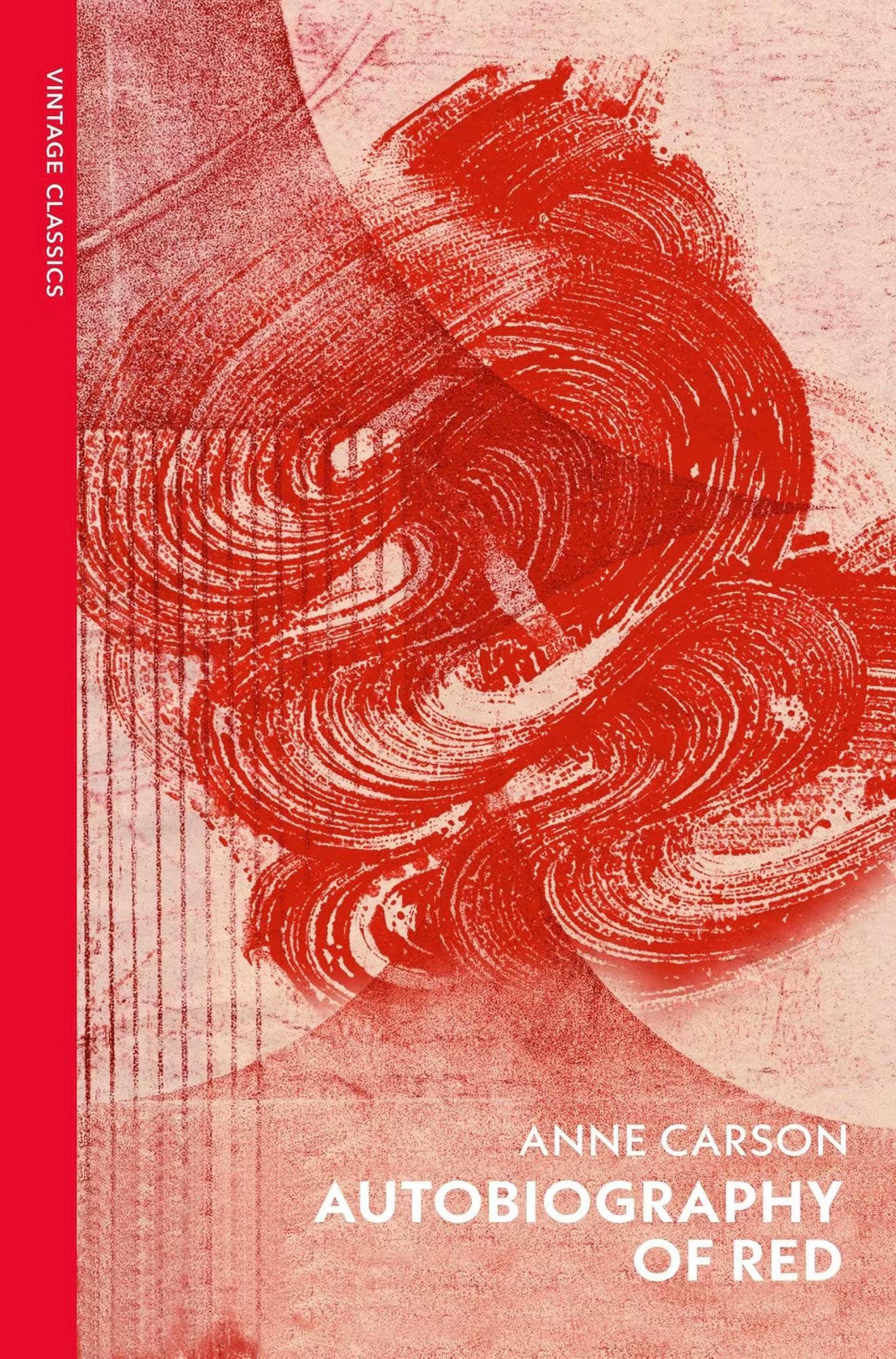
It was raining over the weekend in Korea. For once I had nothing planned, so I stayed in and read.
I’ve never been much of a poetry reader, especially when it comes to contemporary poetry. This time curiosity got the better of me, and I picked up Autobiography of Red by Anne Carson, a fellow University of Toronto alum.
She’s quite a character. She studies ancient Greek literature, writes poetry, translates, and likes to box. 🥊 At the University of Toronto’s 2012 convocation, she opened by saying that inspirational speeches weren’t her personality type. Instead, she told the audience about her thirteen-second Short Talks and got everyone to join in.
Most commencement speakers try to explain the whole of life. Carson gives you a philosophical question every thirteen seconds. Pretty cool.
Autobiography of Red is a novel in verse that reimagines an ancient Greek myth. In the original story, the hero Herakles kills Geryon, a red, winged monster, and takes his cattle.
More than two thousand years later, Carson lets the monster tell the story of his own life.
Geryon has been red from birth, with wings growing from his back. Hurt by his older brother as a child, he grows up sensitive and lonely. He likes to watch and record things, and eventually takes up photography. The world seems easier to understand through a lens.
At fourteen, he meets sixteen-year-old Herakles.
The two are almost complete opposites. Geryon is shy and sensitive, reluctant even to let anyone see his wings. Herakles is warm and impulsive. He loves music, travel, and adventure, and the whole world seems open to him.
One goes through life carefully. The other wants to live every day several times over.
Geryon falls in love with him.
With Herakles come his first kiss, his first embraces, and his first experiences of physical intimacy. For a boy who has always felt different, being wanted and loved is something entirely new.
Still, Geryon can’t quite make peace with his wings. He longs to be understood, yet he’s afraid to let someone see the most vulnerable part of him.
There’s a familiar contradiction in that. We want the person we love to know us completely, yet it’s often from that very person that we hide the parts of ourselves we can’t accept.
They also want different things from love. Geryon wants it to last. Herakles wants to stay free. He cares for Geryon, but he’s unwilling to stop moving for the sake of the relationship.
In the end, he breaks it off.
The echo here is brilliant. In the Greek myth, Herakles kills Geryon with an arrow. Carson has him do it again. This time there’s no bow and no blood. All he does is end a relationship.
What’s crueler still is that he doesn’t even have to be a bad person. He can have loved Geryon sincerely and leave him just as sincerely. For Herakles, it’s another page turning. For Geryon, it feels as if half his world has been torn away.
Two people can be in the same relationship and come away having lived through entirely different things.
Eight years pass.
Geryon grows up. He travels, takes photographs, and discovers philosophy, trying to make sense of the world and of himself.
Then, in a tango bar in Buenos Aires, he runs into Herakles. The man who once broke his heart is still as charming as ever. He now has a boyfriend, a Peruvian named Ancash.
Eight years is long enough for a boy to grow up. It may take longer for a memory to fade.
The three of them travel to Peru. On the trip, Herakles becomes intimate with Geryon again, even though he’s with someone else. Geryon doesn’t turn him away. The person he once lost is finally close enough to touch.
This time, he cries.
Their bodies can come close again while the distance between them stays. What he wanted eight years ago is suddenly his again, but it feels different now.
That reminded me of a paradox Carson explores in another book, Eros the Bittersweet.
Love begins with distance. We’re drawn to each other because we’re different, and we want to come closer because there’s always something about the other person we can’t quite reach.
Once we fall in love, we want to close every gap. We want to enter each other’s lives and thoughts, perhaps even become part of each other.
Little by little, you’re less like yourself, and so am I. The differences that first drew us together begin to blur. We look to love to make us whole and can lose sight of where we end and the other person begins.
Then one day, the two people part.
The distance returns, and both are changed.
That may be the most intriguing paradox of desire. Distance draws us together. Trying to close it changes us. When it opens up again, we have to find ourselves there.
The person who surprised me most in the novel was Ancash. He notices the wings Geryon keeps hidden and tells him about a Peruvian legend of red, winged people. In that story, red skin and wings can be the source of an extraordinary power.
Geryon has always thought of himself as a monster. To someone else, those wings look entirely different.
Who’s to say that the thing you work so hard to hide will look like a flaw to someone else?
At the end of the novel, they reach a volcano in Peru. The mountain is black against the night, with a red glow rising from below. Geryon finally spreads the wings he’s hidden for years and flies into the darkness.
Carson gives him no reconciliation, no chance to win back his love, and no fairy-tale ending.
I rather like her for that.
These days, the internet is full of advice about moving on, cutting your losses, and protecting your emotional energy, as though maturity meant letting go quickly, walking away gracefully, and preferably deleting every last memory.
Carson refuses to subscribe to that.
She allows people to be vulnerable, jealous, and unable to let go. She allows someone to encounter an old love eight years later and still feel his heart stir, to know perfectly well that he might get hurt again and still be unable to resist drawing closer.
She neither romanticizes human weakness nor rushes to correct it. The mind may understand what the heart cannot. Human beings are rarely that tidy.
In the original myth, the hero kills the monster, and the story ends.
Carson, however, lets the monster live on after being wounded by the hero. He travels, takes photographs, makes new friends, and continues exploring this vast and wonderfully strange world.
He is still the same red, winged monster.
Only now, he no longer sees himself as one.
Perhaps what we cannot let go of is not the person we once loved, but the person we once became because of them. Or is it?