COLLECTED LIGHT · ORIGINAL STORY
Perhaps Civilization Isn’t Found in Museums
France has been making headlines again lately. Street protests, smashed storefronts, looted luxury boutiques including Rolex and Louis Vuitton, and even a historic town hall wasn’t spared. Buildings that survived two world wars ended up being burned by their own people.
Some protesters demanded a lower cost of living. Others simply brought the price of a Rolex down to zero. The former called for wealth redistribution; the latter had already begun implementing it. The only minor issue was that the store owners hadn’t approved the initiative.
Of course, the protesters and the opportunistic looters weren’t necessarily the same people. Some wanted to change the country; others wanted a five-finger discount. Different objectives, conveniently identical meeting locations.
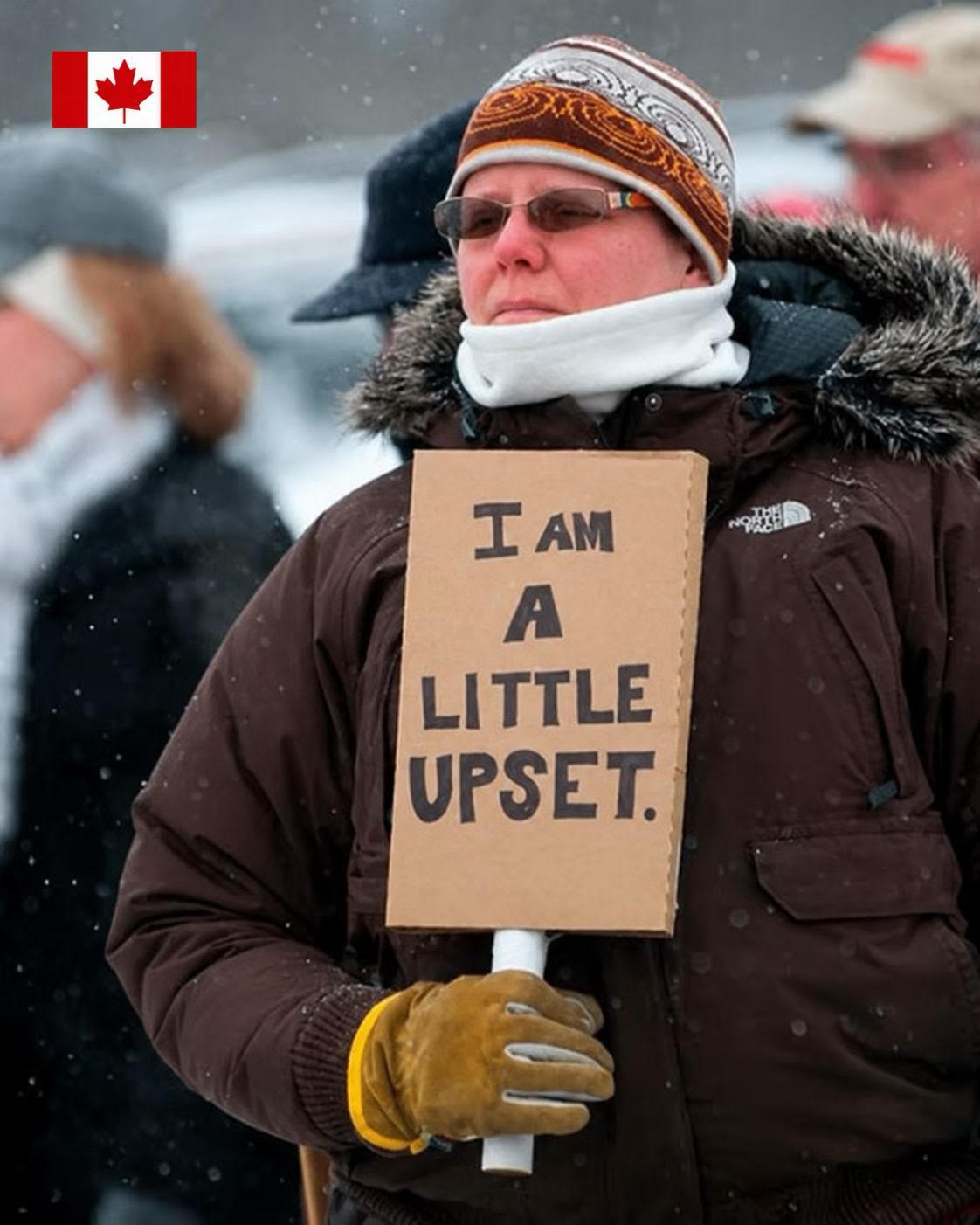
By contrast, I remember seeing a photograph of a Canadian protester holding a sign that read:
“I am a little upset.”
By Canadian standards, that’s probably a fairly aggressive display of emotion. If things got really serious, it might escalate to:
“Sorry, but I’m really upset.”
Having lived in Canada, I’ve also noticed another popular form of protest: rather than arguing, people simply stop showing up for work.
Given the usual pace of work in Canada, it can admittedly take a while to notice the difference. But when a place that was already sparsely populated becomes even emptier, you know things are getting serious.
Some employees don’t even support the strike but have to stay home because of union rules. After all, your desire to work shouldn’t undermine the solidarity of those who don’t.
So the supporters stay home, and the opponents stay home too. Politically divided, remarkably aligned on vacation schedules.
This reminded me of the demonstrations I witnessed last winter at Gwanghwamun in Seoul.
Following Yoon Suk Yeol’s martial law controversy, two opposing camps gathered on opposite sides of the street. One supported the president; the other demanded his removal. Both were absolutely convinced they represented the Korean people. As for the Koreans across the street, their status remained somewhat unresolved.
Seoul winters are brutally cold. Many protesters traveled from outside the city, holding signs and sitting on the freezing ground all day. And they came back every Saturday.
If that level of dedication were applied to the gym, South Korea would probably be a nation of six-packs.
More than a dozen food trucks were handing out free tteokbokki, fish cakes, and hot broth. Thousands of people lined up patiently amid clouds of steam. For a moment, I wondered whether I’d come to the wrong place.
Somehow, a political rally had acquired the atmosphere of a street food festival. Limited menu, unbeatable prices.
By the afternoon, the whole scene had changed.
Both sides started their own karaoke sessions. ROSÉ and Bruno Mars’s APT. (아파트) echoed through the streets. People who had been deeply concerned about the fate of their nation moments earlier were now dancing enthusiastically by the thousands.
Koreans really have K-pop running through their veins.
Presidents may come and go. The music must go on.
What amazed me even more was that, at precisely five o’clock, everyone dispersed. Streets that had accommodated tens of thousands of people were spotless. Not even a scrap of paper in sight.
And this happened every Saturday.
After spending an entire day arguing over where the country should go, both sides had at least reached a remarkable consensus on where everyone should go at five.
Home.
I’ve encountered this Korean sense of order on quite a few occasions.
Once, I found a wallet and handed it to a security guard, thinking I was doing a good deed. Instead of praising my honesty, he asked why I had moved it.
“Because someone might take it,” I explained.
He looked genuinely puzzled.
“Why would anyone take something that doesn’t belong to them?”
I felt slightly embarrassed. I’d set out to do a good deed, only to discover that my moral instincts were still operating in American theft-prevention mode.
Even more astonishingly, I’ve lost things on the Seoul subway twice. On both occasions, I went back two weeks later and found them exactly where I’d left them.
Two weeks!
Sometimes I can’t even remember what I intended to do two weeks ago. Apparently, the Seoul subway remembers on my behalf.
Of course, Korea isn’t free of theft. But the underlying assumptions seem different.
My instinct was to ask, “What if someone takes it?”
The security guard’s instinct was to ask, “Why would anyone take something that isn’t theirs?”
One is a question of risk. The other is a question of principle.
We all know what happened next. In an attempt to escape the supposed curse of the Blue House, Yoon chose not to live there. He nevertheless became the first sitting South Korean president to be arrested. Lee Jae-myung apparently concluded that the curse had little to do with the address and moved back into the Blue House.
My Korean colleagues are politically divided too. We attend meetings, review data, and discuss business together every day. But the moment politics comes up, you realize there are two entirely different Koreas sitting in the same conference room.
I wasn’t particularly surprised. After years in management, I’ve learned that a meeting of ten people can easily produce twelve opinions. The fact that a Korean election produces only one president is already quite an achievement in efficiency.
All of this got me wondering whether culture and civilization are actually two different things.
France gave the world the Louvre, Voltaire, Rousseau, and Victor Hugo. In terms of cultural achievement, it is undoubtedly one of humanity’s star pupils. Yet several centuries of Enlightenment philosophy have apparently not been enough to convince everyone that someone else’s Rolex is not theirs to take.
Culture can be created by geniuses. Civilization has to be maintained by ordinary people, every single day.
A country may possess some of the greatest works of art in human history, yet still struggle to keep a wallet undisturbed on a subway for two weeks.
Of course, most French protesters are peaceful, Korea has had its share of political violence, and Canadians aren’t universally mild-mannered. Ranking entire nations by their level of civilization based on a handful of demonstrations would probably be even less reliable than conducting employee performance reviews.
But there is one thing I’ve come to believe more and more.
Civilization is not the absence of anger. People who never get angry may simply not have received their latest credit card statement.
Nor is civilization about unquestioning obedience. Much of human progress has come from people who refused to do as they were told.
Civilization is having every reason to be angry without believing that your anger entitles you to harm innocent people.
You can demand the president’s resignation, but the bakery on the corner had no hand in making government policy.
You can demand wealth redistribution, but the owner of the Rolex boutique never appointed you as their CFO.
You can be absolutely convinced that the people across the street are wrong, but they still have every right to sing their own version of APT. — even if they’re hopelessly off-key.
Looking back on those Saturdays at Gwanghwamun, what stays with me isn’t who eventually won the election.
It’s the sight of tens of thousands of people spending an entire day in the freezing cold arguing about the future of their country, eating fish cakes, singing songs, and going home promptly at five, leaving the street cleaners remarkably little to do.
Perhaps the true test of civilization is not whether we can reach an agreement, but whether, when agreement is impossible, we are still willing to leave the world intact for one another.
It sounds like a grand philosophical idea. In practice, it may be as simple as not taking someone else’s wallet, not smashing someone else’s shop, and taking your trash with you when you leave.
As for the Canadians, they’ve offered an alternative approach. It’s perfectly fine to be upset. It’s perfectly fine to stop showing up for work.
Just don’t let your boss discover that your productivity is pretty much the same when you’re not on strike.