COLLECTED LIGHT · ORIGINAL STORY
My Second Asian Summer in Seoul
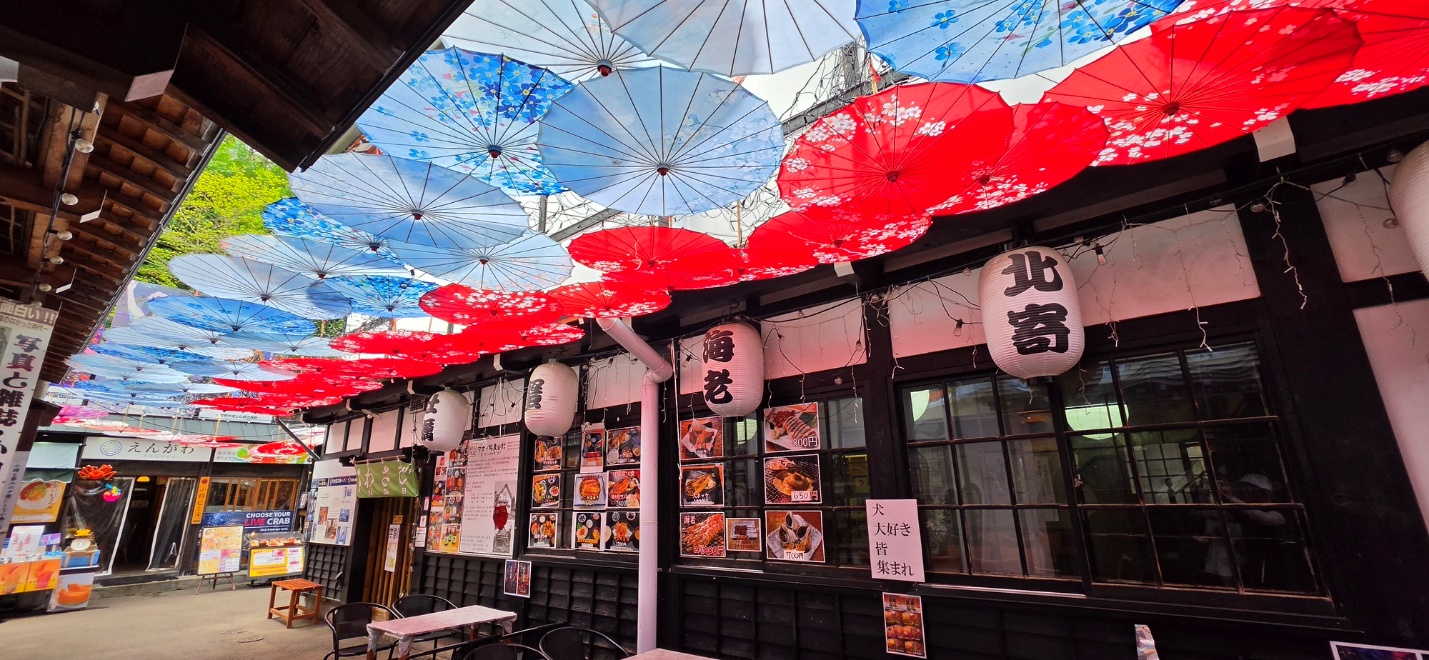
My Second Summer in Asia
Last summer, I took a vacation in Tokyo.
It was so hot I questioned every life decision that had brought me there.
This year, I learned my lesson.
I headed north.
To Hokkaido.
As it turns out, maps don't lie.
The moment I stepped off the plane, it was below 20°C.
I instantly forgave Asia for having summers.
From Sapporo to Furano, Biei, Asahikawa, Otaru, and finally Tomakomai, one thing stayed remarkably consistent.
Everything was...
Clean.
Exceptionally clean.
How clean?
I spent half the trip looking for a trash can.
Eventually I realized that while trash cans weren't always easy to find...
Trash itself was nowhere to be found.
Not along the roads.
Not in the cities.
Nowhere.
Then I noticed something else.
Japanese cars are tiny.
Tiny enough that, from a distance, they look like little cartoon cars patiently commuting to work.
If you parked an American SUV beside them, it would feel like one sneeze could send three kei cars rolling down the street.
Even more surprising?
During the entire road trip, I didn't hear a single car horn.
Not one.
For a while, I honestly wondered whether Japanese cars simply weren't manufactured with horns.
Eventually, when no one was around, I found an empty road and quietly tested the theory.
The horn worked.
People just had incredible patience.
The kind of patience that almost didn't seem human.
At least not by the standards of most American drivers...
or Korean drivers.
Then there was the air.
Public spaces didn't smell like cigarette smoke.
It reminded me of downtown Seattle, where the air often carries a scent that's difficult to identify.
Is it marijuana?
Homelessness?
Or someone who smoked marijuana and then decided to mark their territory the way certain animals do?
Compared to that, Seoul is already doing quite well.
Smoking areas are concentrated.
You still end up inhaling a little of someone else's life every time you walk past one.
Japan solved the problem differently.
Smokers get their own little glass rooms.
Inside, clouds of smoke.
Outside, peaceful streets.
The smokers smoke.
Everyone else keeps walking.
Nobody bothers anybody.
Maybe that's the most comfortable relationship adults can have.
The thing that stayed with me most, however, wasn't the scenery.
It was the people.
Years ago, riding in a taxi on the left side of the road in Sydney left me slightly traumatized.
This time I decided to tempt fate again.
I rented a right-hand-drive car.
My first few hours behind the wheel were...
Conservative.
Actually, "terrified" is probably a more accurate word.
Cars kept passing me on the right.
I had already prepared myself for what I considered the universal language of impatient drivers:
Being judged.
Or perhaps receiving the famous American middle finger.
Instead...
Every car that passed gave me a little wave.
Or a polite nod.
As if to say,
"Excuse me, I'll just go ahead."
My only thought was:
"Wait... I'm the slow one. Why are you apologizing to me?"
Later, I drove through several construction zones.
Workers stood by the roadside holding soft fabric warning signs.
Open.
Close.
Open.
Close.
Like a giant hand-operated GIF.
No electricity.
No AI.
Surprisingly smooth frame rate.
Every single time a car passed, they bowed.
As if saying,
"Sorry for taking a few seconds of your time."
I couldn't help wondering how many hundreds of bows their backs endured every day.
Then I thought about road construction in the United States.
Close one lane.
Forty-minute traffic jam.
No explanation.
No apology.
Six or seven workers watching one person work.
And another standing perfectly still with a stop sign.
Meanwhile, your navigation app calmly announces:
"Estimated delay: 38 minutes."
As though those 38 minutes had never belonged to you in the first place.
One morning at breakfast, I noticed an elderly gentleman wiping tables.
Spray bottle in his left hand.
His right hand held out in front of the nozzle.
Not for himself.
For the people waiting nearby.
He didn't want the mist to splash onto them.
I watched him for several minutes.
It suddenly occurred to me that even a spray bottle could have good manners.
Later, in Furano, I stopped to buy one of the region's famous melons.
I couldn't read the Japanese labels.
So I picked the one that simply looked nicest to me.
At the register, the shopkeeper gently stopped me.
She gestured for quite a while.
For a split second I panicked.
"Oh no... Did I accidentally pick the store's priceless display melon?"
I opened Google Translate.
Her message appeared:
"This one won't be ripe for another three days. I thought you probably wanted to eat one today."
I nodded so enthusiastically I nearly gave myself whiplash.
She walked me to another shelf.
Picked up a much prettier melon.
"This one," she smiled.
"Today."
I rushed back to my hotel.
The very first thing I did was cut it open.
Not because I was hungry.
Well... not entirely.
I was simply curious.
She was right.
It was perfect.
Soft enough to melt in your mouth.
Sweet enough to feel like cheating.
That was the day I learned melons apparently come with appointment schedules.
Accurate to the day.
Later, I stopped by Rokkatei to buy some desserts.
As the cashier packed everything, she carefully checked the expiration date on every single item.
Then she pointed to the matcha daifuku.
"Please eat this by tomorrow."
For a moment, I felt she understood my eating schedule over the next twenty-four hours better than my own mother.
On the last day, I stopped for gas.
I stood in front of a pump covered entirely in Japanese, studying the buttons without making much progress.
Before I knew it, the station attendant came sprinting out of the office.
Not walking.
Actually running.
The urgency suggested that if he arrived one second later, I might accidentally blow up the entire gas station.
After filling the tank, he apologized repeatedly in hesitant English for making me wait.
I was the one who felt embarrassed.
Looking back, nothing dramatic happened during the trip.
There were no movie moments.
No earth-shattering revelations.
And certainly no grand conclusion about "what Japanese people are like."
Just countless ordinary people...
Who chose to do one little thing more.
One extra reminder.
A few extra steps.
One hand shielding a stranger from a spray bottle.
One more bow.
At the time, each gesture felt so small that I assumed I'd forget it within five minutes.
Yet after the trip ended...
Those were the only things I remembered.
Eventually I realized that's what makes travel so fascinating.
It's rarely about what you see.
It's about what quietly changes in you after you come home.
Maybe the next time I catch up to someone driving well below the speed limit...
I won't honk.
Maybe I'll simply wave.
And let them know—
It's okay.
Sometimes...
Going a little slower isn't such a bad way to travel.