COLLECTED LIGHT · ORIGINAL STORY
A Song Beneath Independence Gate
Today is August 15, Korea’s National Liberation Day.
During the day in Gwanghwamun, a procession stretched for miles. Korean and American flags waved side by side. Koreans remember that their liberation in 1945 came with America’s defeat of Japan. They also remember that, in the war that followed only a few years later, the United States helped defend the country and the democracy it would become.
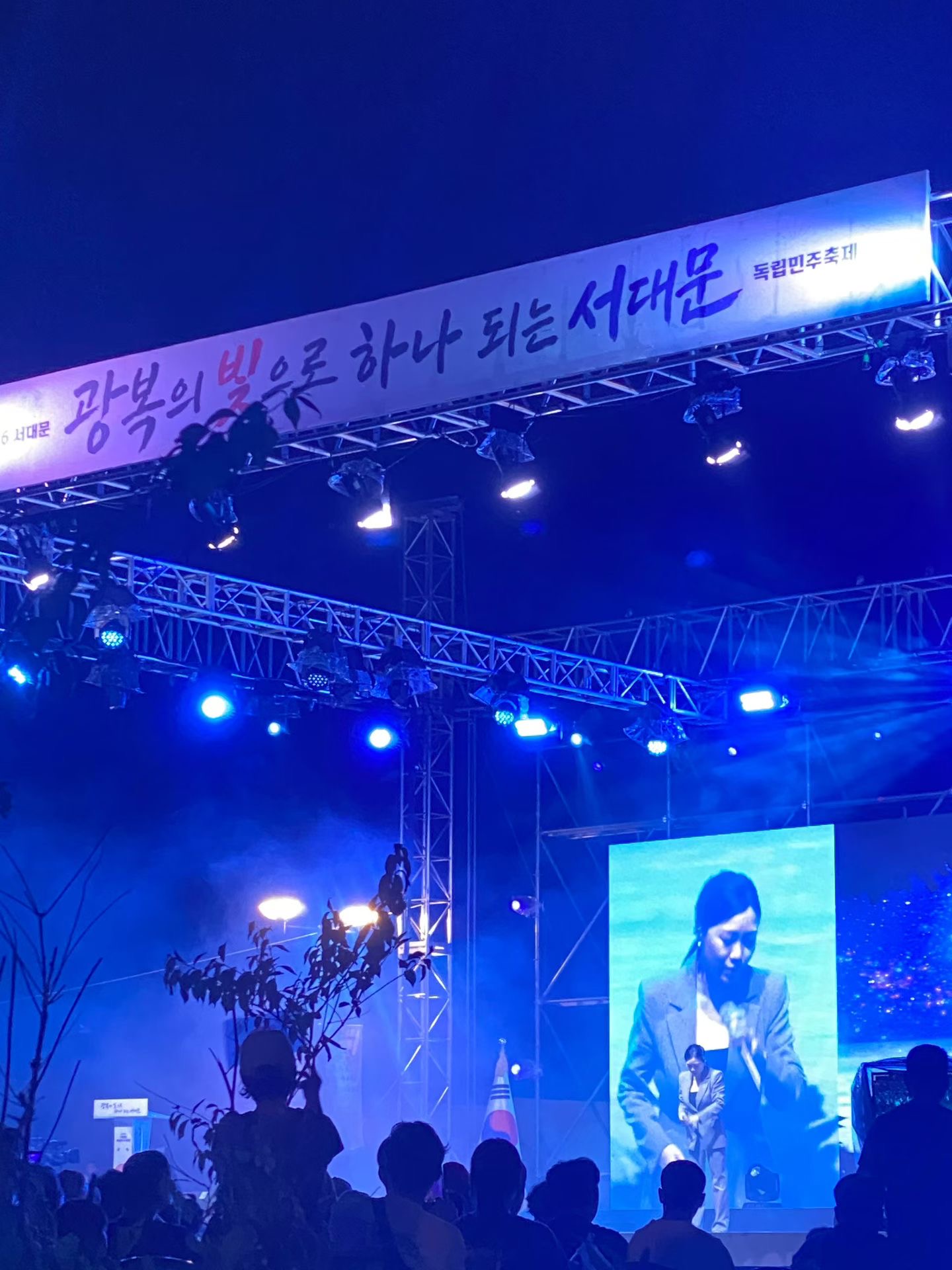
That evening, I happened to pass Seodaemun Independence Park and came across the Seodaemun Independence & Democracy Festival.
The stage stood beside Seodaemun Prison History Hall. Many Korean independence activists were once imprisoned here. Some never walked out.
Behind the stage stood Dongnimmun—Independence Gate.
Built in 1897, it commemorated Korea’s emergence from Qing China’s influence and its aspiration to stand as an independent nation. Yet only a few years later, Korea began losing its sovereignty. From 1905 to 1945, that struggle lasted forty years; formal Japanese colonial rule lasted thirty-five.
For a small country caught between great powers, there must have been many moments when hope seemed almost impossible. Yet its people never gave up their language, their culture, or their traditions.
After living here for more than a year and getting to know the country up close, I sometimes find Koreans stubborn, blunt, and unwilling to bend. At other times, I find myself deeply moved by that same intensity—their warmth, solidarity, and sheer determination to hold on.
I turned on Google Translate to follow one of the speeches from the stage. The message, roughly, was this: the country would continue to care for the families of those who had sacrificed for it.
Not simply as a political gesture, but so that generation after generation could believe in something fundamental:
If you love and protect your country, your country will protect you, too.
For the independence and continuity of a nation, that belief matters enormously.
It reminded me of something a Korean colleague once told me about the 1997 Asian financial crisis. Ordinary Koreans brought out their gold jewelry and donated it to help the country repay its foreign debt. Her father even had a gold tooth removed from his mouth and donated that.
When a country is in trouble, its people hold it up.
And a country, in turn, must never forget those who once held it up.
Later that evening, Lena Park (박정현) came onstage to sing.
Of all the songs performed that night, there was only one whose every word I understood.
By coincidence—or perhaps fittingly—it was “You Raise Me Up.”